
The DeepSeek Effect (Part 2)
America may still have a competitive edge in AI technology itself, but Chinese corporates could move faster to apply AI to real-world operations.

(Author’s note: This is Part 2 of my analysis on the “DeepSeek Effect” as I try to explain other “effects” beyond the technical aspect. Read Part 1 here for the start and background of the “DeepSeek Effect”.)
The so-called “DeepSeek Effect” has grown way beyond technology over the past two months. The top leadership of China, including President Xi Jinping himself, now widely considers DeepSeek a golden opportunity to restore global investors’ confidence in China’s economic recovery.
In just a few weeks since DeepSeek became a global hit, President Xi organized a rare meeting with Chinese technology entrepreneurs including both the well-established Jack Ma, founder of the Alibaba Group, and DeepSeek founder Liang Wenfeng (pictured below). This has been described by Chinese state media as a “new start in the technology world.” In the meeting, Xi’s message to Ma, Liang and other technology entrepreneurs was clear: China needs more “self-reliance” on technology and innovation and the government will support your development.
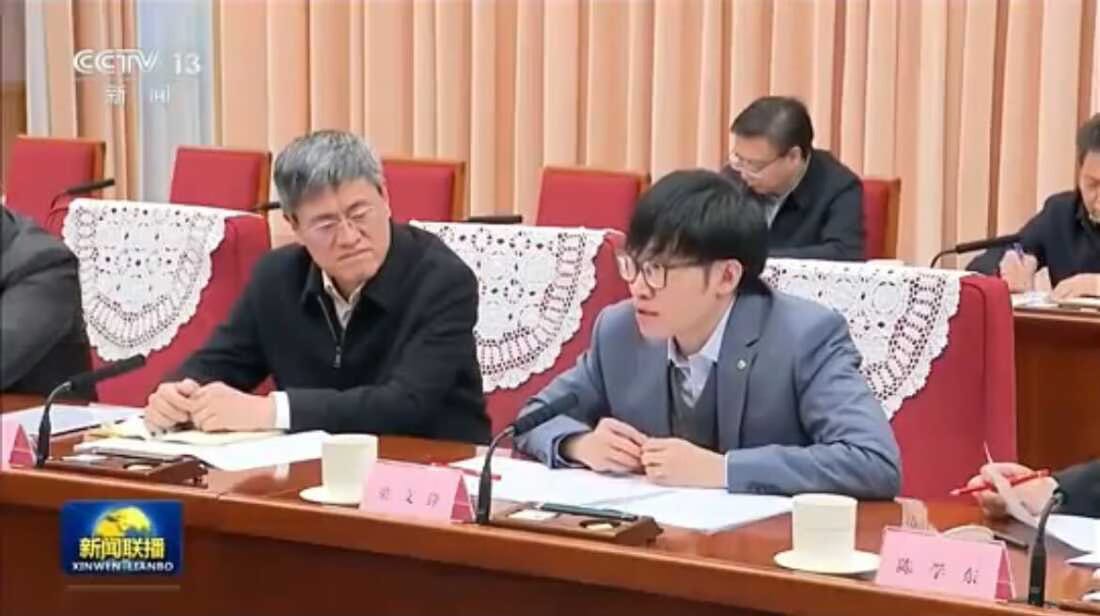
For many, Xi’s surprising meeting with the technology entrepreneurs feels like a 360- degree change after the nationwide crackdown on Big Tech including Alibaba and its major rivals like Tencent and Baidu just a few years ago.
At the time, Beijing was worried that Big Tech companies in China were out of control in terms of their monopoly power and even the popularity of their products and services. For example, at one point China’s central bank was worried about low circulation of banknotes as most Chinese consumers got used to the two major payment apps in China, Alipay of Alibaba and WeChat Pay of Tencent.
Now Xi may consider DeepSeek a new factor boosting China’s stock market as equity analysts call for revaluation of Chinese stocks, thanks to DeepSeek’s global impact. Hong Kong’s Hang Seng Index has so far this year been the world’s best performing major stock market, especially the Hong Kong-listed technology companies.
Some say the impact of DeepSeek on the stock market is exaggerated and may create more asset bubbles. Others argue it was mainly because Chinese investors hadn’t seen any positive factor since the end of the pandemic, until DeepSeek came along. DeepSeek has indeed boosted Chinese investors’ confidence by introducing the hope that indigenous Chinese technology will be able boost the efficiency of many other sectors.
For example, a major supermarket chain operator in China has already tried to upgrade its customer relationship management (CRM) system by integrating it with DeepSeek. Such efforts should not be underestimated. America may still have a competitive edge in AI technology itself, but Chinese corporates could be moving faster – much faster than their American peers expect perhaps – to apply AI to real-world operations in almost every aspect of Chinese economy, already the world’s second largest.
The other extended impact of DeepSeek beyond technology may be with international relations. The United Nations has recently urged member nations to focus more on “inclusive AI,” reflecting growing concerns in the international community that smaller countries might be left behind in the global AI race.
Indeed, smaller nations, including many in the Global South, at one point thought that they might have to choose between US and China AI models. DeepSeek has raised hopes for “sovereignty AI.”
In Central Asia, for example, some developers in the “Stan” countries are already following the DeepSeek path to build their own DeepSeeks, given the open-source nature of DeepSeek’s AI model. Such trends have caught OpenAI’s attention, and its founder Sam Altman has publicly acknowledged he might be on the “wrong side of the history” for his decision to switch to closed AI models after Chat GPT-3.
The debate about DeepSeek will continue. President Xi must know he now has a good card in his hand. How he will play it remains to be seen.