
Strategic Stability, Different Scripts: U.S.–China Tensions Boil Ahead of Xi’s Visit
With Xi’s Washington visit looming, U.S.–China ties are heating up as both sides clash over what “strategic stability” really means.

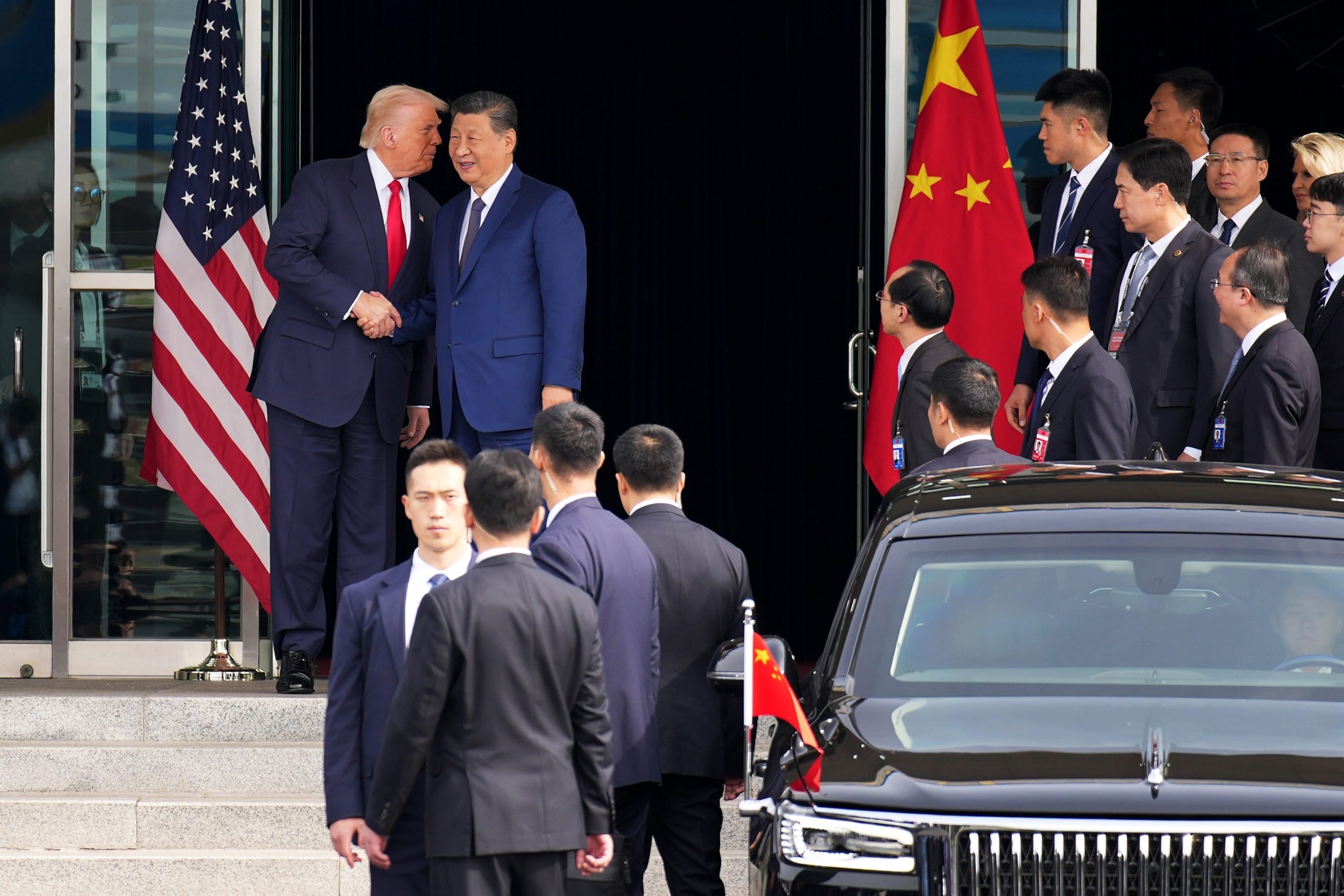
If U.S.–China relations could be measured with a thermometer, the reading in late May — just after the first Trump–Xi summit this year in Beijing — would have hovered around 37°C, the normal human body temperature. But in recent weeks, the mercury has climbed sharply. By late July, the bilateral temperature is edging toward 40°C, the fever zone, with artificial intelligence (AI) disputes at the center of nearly every conflict.
On July 30, Chinese Vice Premier He Lifeng held a video call with U.S. Treasury Secretary Scott Bessent and U.S. Trade Representative Jamieson Greer. According to Beijing’s official readout, He raised “serious concerns” over recent U.S. trade and economic restrictions.

Diplomatic language matters. In Chinese usage, “grave concerns” is the more common phrase for expressing displeasure toward Washington. The choice of “serious concerns” — a term more often deployed in tense exchanges with Japan — signals escalation. It represents a deliberate rhetorical shift, underscoring Beijing’s frustration with Washington’s intensifying measures in recent weeks.
In fact, this was not the first time Vice Premier He used the phrase. On April 30, during another call with Bessent, he also voiced “serious concerns” about U.S. restrictions. That exchange followed Washington’s pressure on Panama to wrest control of canal operations from Hong Kong tycoon Li Ka‑shing’s business empire — a move Beijing opposed vehemently.
Mutual Frustration
Sources noted the frustration is mutual in both Washington and Beijing these days.
U.S. officials are increasingly dissatisfied with China’s follow‑through on rare earth exports and agricultural commitments — including promised purchases of American soybeans and beef — made during President Donald Trump’s May visit. Washington expected progress before President Xi Jinping’s planned late‑September trip to the White House.
The two sides had agreed to establish a Board of Trade to explore tariff reductions on goods worth roughly US$30 billion. Yet Beijing has been accused of moving tactically — and slowly — while Washington is pressing hard for concrete action.
Meanwhile, AI has become the flashpoint. Just few weeks ago Chinese startup Moonshot’s release of its open‑weight model Kimi K3 rattled Silicon Valley and Wall Street, challenging U.S. peers like Anthropic and OpenAI. In response, voices in Congress have called for banning all Chinese AI models. Beijing sees this as a direct attempt to stifle its technological rise on the world stage.
On July 28, the Trump administration announced bans on imports of Chinese robots — including even basic household devices such as robotic vacuum cleaners — as well as power inverters. Beijing immediately warned of retaliation.
Days earlier, Washington imposed new tariffs of 10–12.5% on goods from 60 trading partners, assigning China the higher rate. And on July 31, the administration added 43 Chinese companies to the Uyghur Forced Labor Prevention Act (UFLPA) Entity List, bringing the total to 187. For Beijing, accusations of forced labor are not merely economic measures but an affront to national dignity.
Strategic Stability Under Strain
The May Trump–Xi summit produced a pledge of “strategic stability,” intended as a guarantee against further escalation. But that stability is now under strain. Rare earth exports — critical for semiconductors — remain restricted, and AI policy risks are multiplying.
Trump’s personal diplomacy has so far kept relations from spiraling. He prefers one‑on‑one dealings with “strongman” leaders — Vladimir Putin of Russia, Kim Jong Un of North Korea, and Xi of China— and has positioned himself as the most pro‑Xi figure in his administration. Cabinet members, including Bessent, follow his lead. Yet beneath the surface, Washington still views China as a competitor, even a threat, though officials avoid the term in deference to Trump’s approach.
Following the launch of the near‑frontier model Kimi K3, Treasury Secretary Scott Bessent blasted Chinese tech firms on social media, accusing them of intellectual property theft and threatening sanctions. At the Asia-Pacific Economic Cooperation (APEC) Digital Week meetings in Chengdu recently, the U.S. delegation echoed those concerns in closed‑door sessions with Chinese officials — though they deliberately refrained from making overly aggressive comments about Chinese AI models in their public remarks.
For Beijing, stability means “no more actions” from Washington — an unrealistic expectation.
For Washington, stability means managing tensions without derailing cooperation.
Taiwan remains the ultimate red line. Trump has delayed arms sales to Taiwan until after Xi’s visit, a gesture of restraint. But structural tensions persist, from AI to rare earths, Iran, Ukraine, Russia, and North Korea.
Xi’s Calculus: A Shorter Visit?
In an effort to pave the way for Xi’s visit, Chinese Executive Vice Foreign Minister Ma Zhaoxu traveled to Washington on July 22–23, meeting senior U.S. officials including Deputy Secretary of State Christopher Landau, National Security Council Asia Director Ivan Kanapathy, and Under Secretary of Defense for Policy Elbridge Colby. The level of engagement showed Washington’s respect, a signal that escalation is not inevitable. Yet sources note that the gap in expectations for Xi’s trip remains wide — especially on AI.


Both sides are preparing for their first round of AI dialogues in early September, designed to put all issues on the table before the second Xi–Trump summit. When Xi meets Trump in the White House in late September, it will mark the first occasion for the two leaders to discuss “AI diplomacy” directly — a recognition that technology has become the defining axis of great‑power competition.
Still, signs point to a more cautious approach from Beijing. Sources suggest Xi may cut his U.S. trip to a single city — Washington, D.C. — rather than also traveling to New York for the UN General Assembly.
Security concerns weigh heavily: protests in New York would be harder to manage than in the capital. Protocol considerations also matter. Xi may mirror Trump’s May visit to Beijing, limiting his stay to 48 hours. A tentative schedule has Xi landing in Washington on September 23 and departing on September 25. Speculation also lingers that Xi could tack on a visit to Canada, though that remains uncertain.
The Politburo, China’s top decision‑making body, recently announced that the fifth plenary session of the Communist Party’s 20th Central Committee will convene in October. This means Xi must return to Beijing to prepare for what is widely regarded as a pivotal gathering of the Party’s senior leadership.
The risk of rescheduling Xi’s visit to Washington, D.C. cannot be fully dismissed. If tensions rise further, sources indicated Xi could delay his trip, just as Trump once postponed his own China visit due to the Iran situation. Such a move would be a blow to Trump personally, undermining his narrative of respect and rapport with Xi.
Beijing understands the risks of backfire: Trump prizes respect above all, but Xi must also manage domestic nationalism. A hostile environment in America would make the optics untenable.
Global Stage and Domestic Politics
Looking ahead, both sides are juggling multiple high‑level meetings. Trump has indicated he wants to attend APEC Leaders Meeting in Shenzhen — widely known as China’s Silicon Valley — in November. Xi, in turn, could fly to the U.S. again to attend the G20 gathering in Miami in December. These exchanges fit Trump’s “G2” vision — a world defined by U.S.–China leadership rather than multilateral forums like the G7. For Trump, diplomacy is about strongmen and bilateral deals, not institutions.
Yet volatility remains. Trump could change his mind about Shenzhen if the temperature rises further. Beijing, meanwhile, is watching closely for the next U.S. move — particularly whether the White House might issue an executive order banning all Chinese AI models. Such a step would be seen as discriminatory and could trigger retaliation.
Structural tensions persist. Washington wants Beijing to stop using rare earths and magnets as leverage; Beijing wants Washington to ease technology export controls. Both sides know their cards on the table, and neither wants to push too far.
Domestic politics also intrude. With U.S. mid‑term elections approaching, For American voters, Trump’s priority is inflation and gas prices, not China. Iran also looms larger as a risk. This explains why both sides are trying to manage relations structurally, even amid tactical flare‑ups.
Ultimately, the best doctors for the world’s most important bilateral relationship remain Trump and Xi themselves. Head‑of‑state diplomacy (元首外交) matters because only they can stabilize ties when the fever spikes. The rising temperature may be tactical — a negotiation strategy ahead of Xi’s visit — but it also raises the risk of miscalculation.
If Xi shortens or reschedules his trip, the symbolism will be profound: even leader‑to‑leader diplomacy cannot fully contain the structural rivalry. The thermometer is rising, and the patient is fragile. Xi’s visit to Washington could either cool the temperature or push it higher. The increasing possibility of a shortened trip for Xi already underscores the volatility.
For policymakers and observers, the lesson is clear: AI is no longer a technical issue but the central axis of geopolitics. Trade, rare earths, forced labor, Taiwan — all are now refracted through the lens of technological competition. The fever will not break easily. Only sustained, careful diplomacy can bring the temperature down.