
For Nvidia: From China, With Warning
Why did Nvidia get summoned by Chinese cyber regulator and what does the meeting request really mean?

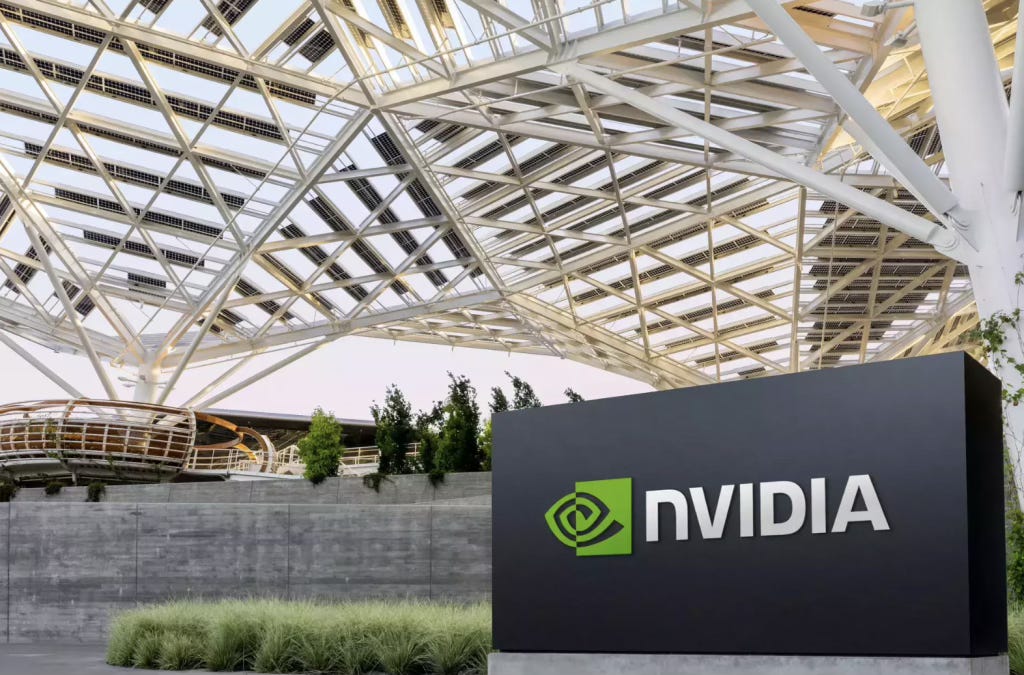
China’s powerful Cyberspace Administration of China (CAC) summoned Nvidia representatives on July 31 2025 to explain alleged security vulnerabilities in its AI-optimized H20 chips. Chinese regulators raised concerns about potential “loophole and backdoor” vulnerabilities, including location tracking and remote shutdown capabilities—elements previously highlighted by U.S. lawmakers in proposed semiconductor legislation.
This comes just days after the U.S.-China trade talks in Stockholm and two weeks after the Trump administration reversed its earlier ban and approved H20 chip exports to China. The H20, designed to comply with U.S. export rules, has been sold in China since late 2023, aside from a brief suspension in April this year.
A lot of friends asked me for views on this latest event about Nvidia, which seemed to catch many in surprise. Earlier today I shared my views in a daily newsletter for The Asia Group’s clients and below are some key takeaways:
China’s review of Nvidia’s H20 chips is likely a political signal aimed at a domestic audience rather than a commercial escalation. The timing of CAC's meeting request—especially given that H20s had already been sold in China—likely reflects Beijing's desire to assert national strength in response to U.S. policy moves, such as the AI Action Plan.
Language does matter. For now, CAC only decided to “summon” Nvidia executives for a meeting as CAC simply had some questions and perhaps also some suggestions for Nvidia to consider. Getting summons doesn’t mean you already face or will get a formal investigation. In many cases, for example, the Walmart case in March this year, summons could end peacefully with no further actions for the government to take.
By initiating a security inquiry while allowing Nvidia’s sales to continue, China is positioning itself as an assertive buyer capable of walking away from transactions if conditions are deemed unfavorable. China may intend to shape the terms of engagement and remind Washington that market access can be recalibrated in response to political developments.
Sources close to CAC shared that the move was to demonstrate concern over future security risks amid warnings that the United States could one day threaten Chinese national security by remotely disabling Nvidia chips. CAC therefore wanted to use the meeting to warn Nvidia and other U.S. chip firms.
In conclusion, I expect H20 sales to remain strong for many Chinese buyers, especially the Big Tech in China such as Baidu, Alibaba, Tencent, Bytedance, and the more independent “new king” DeepSeek. In fact, Nvidia already ordered 300,000 H20 chips from Taiwan chipmaker TSMC shortly after Nvidia boss Jensen Huang received green light from President Donald Trump to allow him to sell H20 again after the ad hoc suspension since April.
We all know H20 is a sort of “downgraded” version from other Nvidia chips like H100 and H200. The latest model H200, launched in November 2024, is a more powerful successor to the H100, offering significant advancements in memory capacity and bandwidth for even larger and more complex AI models. The U.S. government doesn’t allow exports of H100 and H200 to China.
One thing is for certain that regardless of the sales of H20 in China, Beijing would only double down on its so-called “self-reliance” strategy for technology and innovation, including to develop China’s own advanced chips. Chinese IT industry leaders like Huawei and SMIC are now still playing the catch-up game as Nvidia’s Huang warned during his recent trip to China in July that the race between the U.S. and China for more advanced chip technology could only heat up further.
“Chinese chips are advancing very fast and we have to do our best,” said Huang in an interview with Chinese state broadcaster CGTN.