
Export Controls as Strategy: Beijing Raises Pressure on Tokyo Amid Rising Security Frictions
The latest restrictions highlight China’s shift toward more assertive economic statecraft in managing Japan–China relations.

China’s latest regulatory action marks a notable escalation in its use of economic statecraft: Beijing has formally added 20 Japanese companies to its export‑control list, restricting their access to Chinese‑origin materials and technologies, while placing another 20 firms on a separate “watch list” for potential dual‑use (military–civilian) concerns.
The first group faces immediate compliance obligations and potential supply‑chain disruption; the second serves as an early warning mechanism signaling heightened scrutiny but not yet triggering full restrictions. Together, these moves underscore Beijing’s growing willingness to leverage export controls as a strategic tool amid worsening tensions with Tokyo.
This latest action fits into a broader pattern: Beijing is increasingly deploying regulatory tools — including export controls on critical minerals, high‑performance magnets, and the “unreliable entity list” — to shape geopolitical behavior and signal displeasure toward foreign governments. These tools are no longer used solely for national‑security protection; they have become instruments of coercive diplomacy.
I spoke with several international media outlets, including the Associated Press and Bloomberg, about the implications of this latest development. In my view, the decision to target Japanese defense‑sector firms is best understood as a strategic warning rather than a purely economic measure. China has already effectively suspended rare‑earth exports to Japan, a move that carries real industrial consequences. The new controls serve as a political message: Beijing believes Tokyo has not taken meaningful steps to stabilize relations and is instead deepening security cooperation with the United States and other partners in ways China sees as threatening.
China’s concerns center on what officials describe as Japan’s “new militarism” — a term used increasingly in Chinese policy discourse to characterize Japan’s expanding defense budget, new security legislation, and growing willingness to discuss contingency planning for the Taiwan Strait. From Beijing’s perspective, Japan’s trajectory represents a structural shift in regional security dynamics.
The export‑control decision reflects Beijing’s strategic calculations in multiple fronts. First, economic coercion is now a normalized tool of Chinese diplomacy. The use of export controls to signal political displeasure is likely to expand, especially toward countries involved in U.S.-led security initiatives.
Japan’s defense‑sector modernization will face new constraints. Restrictions on critical minerals and dual‑use technologies could slow certain procurement and R&D pathways. Regional supply chains may fragment further. Companies in Japan and across Asia will need to diversify away further from Chinese inputs in sensitive sectors.
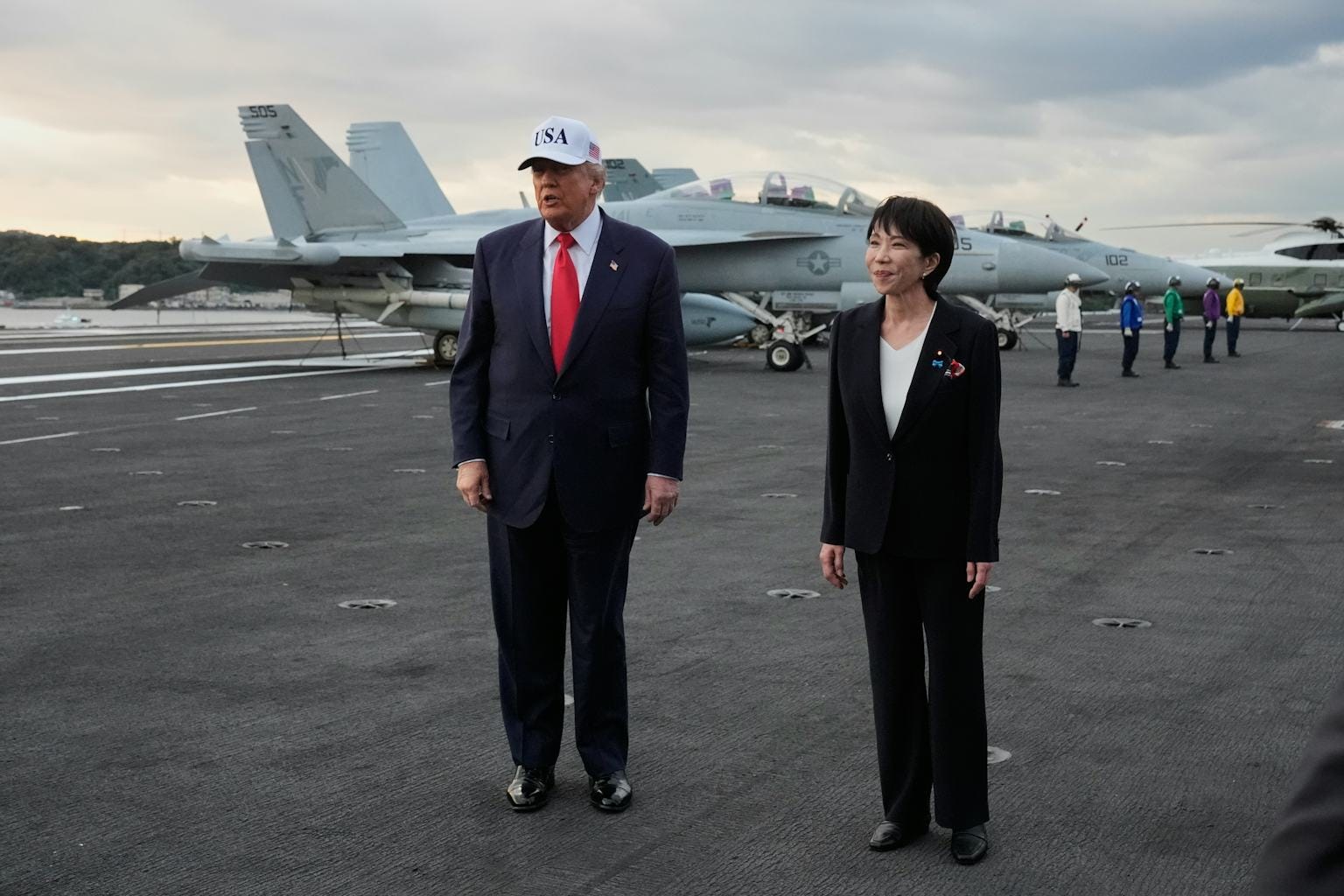
The deterioration in China–Japan relations this year is closely tied to public remarks by Japanese Prime Minister Sanae Takaichi, whose strong support for Taiwan has been interpreted in Beijing as a direct challenge to China’s sovereignty claims. Takaichi’s statements — including suggestions that Japan must be prepared to respond to a Taiwan Strait contingency — were seen as crossing a political red line.
From Beijing’s perspective, Takaichi’s comments confirm a long‑standing concern: that Japan is moving toward a more assertive security posture aligned with Washington’s Indo‑Pacific strategy. Chinese analysts argue that Japan’s defense reforms, combined with its growing cooperation with the U.S., Australia, and other partners, represent a structural shift rather than a temporary political stance.
This context helps explain why Beijing is now using economic tools to signal its displeasure. The export‑control decision is part of a broader strategy to pressure Tokyo to recalibrate its approach before bilateral relations deteriorate further.
Narrow Time Window
Despite rising tensions, there remains a narrow window for diplomatic stabilization. China is hosting the annual meetings of Asia-Pacific Economic Cooperation (APEC) this year, with the Leaders’ Meeting scheduled for Shenzhen in November. Both sides have an incentive to create conditions for a potential meeting between President Xi Jinping and Prime Minister Sanae Takaichi, though Beijing remains deeply wary of her pro‑Taiwan stance.
However, the timeline is tight. The export‑control announcement suggests Beijing is increasing pressure on Tokyo to take visible steps toward improving ties ahead of APEC. Without such steps, the likelihood of a productive leaders’ meeting diminishes.
For now, Japan–China relations remain fragile — not yet stabilizing, and at risk of slipping further if neither side moves decisively to arrest the downward trend. Beijing’s latest export‑control decision should be understood not only as an economic measure but as a strategic signal: China expects Japan to take concrete steps to improve relations, and it is prepared to use economic leverage to enforce that expectation.
Whether the two governments can stabilize ties before APEC will depend on political will, diplomatic creativity, and the ability to manage the Taiwan issue — the core driver of mistrust on both sides.
You can read more from the two newswire reports below, including my comments:
AP: China imposes export controls on 40 Japanese entities as tensions with Tokyo rise
Bloomberg: China Escalates Takaichi Feud by Blacklisting More Japan Firms

On The Road
I’ve been on the road for a while, mainly for AmCham Hong Kong’s annual “door‑knock” visit to Washington, D.C., led by our Chairman David Butts. I’ve been on the AmCham Board for six years, and I currently serve as chair of the Chamber’s Government Affairs Committee. Over just a few days in Washington, our delegation held dozens of meetings across both the executive and legislative branches — and with leaders from both sides of Congress.
I do plan to write a series of reflections on this year’s visit (while still under Chatham House rules), but one takeaway is already clear to me: exchanges and communication remain absolutely essential to the future of U.S.–China relations. In that regard, it is worth noting that President Donald Trump has emphasized the importance of direct engagement with China, including at the highest level with President Xi Jinping, who is scheduled to visit the United States in late September. Sustained dialogue matters, and this year’s meetings reinforced that point.
For my readers and subscribers in Hong Kong: you’re welcome to join our U.S. door‑knock briefing at the AmCham Hong Kong office on July 22, where I’ll be sharing insights alongside fellow delegates. I’d be delighted to meet my readers in person.
Please register online here.