
Compute, Connectivity, and Control: Ensuring Asia Pacific Stays Competitive in the Global AI Race
In this essay, I explore how artificial intelligence, digital infrastructure, and geopolitics intersect to shape Asia’s technological future.


Author’s note: I delivered this essay as my keynote speech at a GSMA event in Kuala Lumpur, Malaysia, on August 6, 2026. I’m sharing it here for my Substack readers who may be interested.
Good afternoon, Communications Minister Datuk Fahmi Fadzil, distinguished guests, colleagues, and friends. It is such a privilege to join the GSMA Executive Luncheon for the launch of Mobile Economy APAC 2026 report. I am honoured to be here among the leaders who build, operate, and secure the networks and data centres that keep our region connected and running every single day.
When we talk about the digital economy, we often talk about apps, platforms, and business models. But today, I want to talk about something deeper — the foundations of power in the AI century.
My message is simple: Asia Pacific cannot afford to lag in the global AI race. And whether we stay competitive will depend on three key forces: compute, connectivity, and control.
First, let me share a bit about my own background: I spent my first decade in journalism, working as a foreign correspondent for Reuters and later as Managing Editor at the South China Morning Post in Hong Kong. My journalist career gave me the privilege of traveling across Asia Pacific and witnessing firsthand the vast economic and income gaps across this diverse region. In late 2015, I joined Facebook — later rebranded as Meta — as one of the original members of its APAC Public Policy team. In that role, I had the privilege of serving as an “ambassador” for the company in the region, engaging the governments, businesses, and civil society.
I am now a Partner at The Asia Group, where I helped launch and chair the firm’s Digital Practice. In this role, I advise many of the world’s most powerful technology companies on navigating the complex intersection of geopolitics and innovation.
As we moved from “old media” in traditional journalism, to social media, and now into the AI era, technology has consistently been the driving force of change. And for the AI era, I want to focus on three themes that draw directly from my own experience in media and technology. I call them the 3Cs: compute, connectivity, and control.
Compute is the engines of AI.
Connectivity is the network that helps to make data travel and sync up on different AI models.
Control refers to the governance frameworks that determine how AI is used, shared, and regulated for the sake of AI safety and security.
These three forces will define national competitiveness, corporate strategy, and regional power dynamics for decades to come. And they are deeply intertwined.
In the next 15 to 20 minutes, I want to take you on a journey — from British mathematician Alan Turing’s early ideas to the rise of Generative AI; from the unseen infrastructure beneath every AI model to the geopolitical stakes of digital governance; and from the challenges APAC faces today to the future opportunities we must seize.
This is not just a technology story. It is a story about economic resilience, regional leadership, and the future of Asia Pacific’s own digital sovereignty.
I hope my remarks today won’t sound like a dry lecture. While I do wear my academic hat as a visiting professor at Schwarzman College, Tsinghua University in Beijing — where I teach the course “Digital Society and Governance” for our Master’s students — I promise not to bring the classroom slides. Still, some of the ideas I share today are drawn directly from my syllabus, because the questions my students wrestle with are the same ones we face here: how technology reshapes society, how governance adapts, and how Asia Pacific can stay competitive in the AI era.
So, let’s begin with compute — the engine of the AI revolution.
Part I — Compute: How We Got Here, and Why APAC Must Not Fall Behind
Can Machines Think?
When we talk about AI today, it is easy to think of ChatGPT, Gemini, Claud, DeepSeek, or the latest advanced Chinese model Kimi K3. But the story of AI is much longer — and understanding that story helps us understand where Asia Pacific stands today.
The modern AI journey can be traced back to Alan Turing. During World War II, he helped the British military decode Nazi secret communications, and in the process he posed a simple but profound question: “Can machines think?” That question became the foundation of everything we now call artificial intelligence.
Turing’s work laid the theoretical foundation for machine intelligence long before computers were powerful enough to attempt it.
Fast forward to the early 2000s, and we began to see the first consumer robotics experiments — home appliances like the Roomba, one of the earliest robotic vacuum cleaners. These systems were simple and limited, but they marked an important shift: for the first time, machines were beginning to sense their environment, move autonomously, and help people solve everyday problems in the physical world.

From AlphaGo to ChatGPT
Then came a moment that changed global perceptions of AI: Google’s AlphaGo defeating many of the world’s top Go players.
In May 2017, when AlphaGo played against China’s top Go master Ke Jie (柯潔), also the world’s No.1 at that time, the match was broadcast live — until it wasn’t. As many of you know, Chinese authorities cut the live signal mid‑match. Not because of technical issues, but because of fear: fear that the world would watch a Chinese champion lose to an American AI system.
The result? AlphaGo won 3–0.
That moment was symbolic. It showed that AI was no longer just a scientific curiosity — it was a matter of national pride, national competitiveness, and national power.

AI became a global buzzword largely thanks to ChatGPT in late 2022, which did something no AI model had ever done before: it went viral.
ChatGPT hit 1 million users globally in just 5 days after its launch in November 2022. In contrast, Facebook took 10 months to reach the same 1-million-user milestone after launching in 2004.
In Asia, the first country where ChatGPT truly went viral was Japan — capturing public imagination and sparking widespread debate about how generative AI could reshape work, education, and everyday life.
It wasn’t just a technological breakthrough; it was a cultural one. Suddenly, AI was not confined to labs or research papers. It was in the hands of millions of people, shaping conversations, workflows, and imaginations.
ChatGPT demonstrated the power of large‑scale compute, massive datasets, and model alignment techniques. It also showed the world what happens when AI becomes accessible, intuitive, and useful.
But the story about ChatGPT and AI didn’t just end there.
China Takes Centre Stage
In February 2025, China’s homegrown DeepSeek was launched, DeepSeek surprised many global observers with its efficiency and performance. And most recently, Kimi K3 pushed the boundaries further, challenging the assumption that the United States would maintain an uncontested lead in frontier AI.
Today, we are witnessing a two‑system AI world:
The U.S. leads in frontier research, foundational models, and global platforms.
China leads in deployment scale, affordability, and rapid evolution.
People often ask me who will win the U.S.–China AI race. My quick answer is: the United States will win in the lab; China will win in the market.
Whether that prediction holds remains to be seen. But what is clear is this: Asia Pacific is now becoming a central arena in the global AI race, especially given the rising popularity of Chinese AI models in Southeast Asia.
Open vs. Closed Models
We also see a growing debate between open models and closed models:
Open models accelerate innovation, democratize access, and enable affordable and easy adoption rapid experimentation.
Closed models offer tighter control, stronger security protection, and more predictable performance.
The debate over open versus closed AI models is not just technical — it is also becoming more and more geopolitical.
Open‑weight models, where the parameters are released, allow countries, companies, and researchers to adapt and deploy AI on their own terms, reducing dependence on foreign vendors and enabling sovereign innovation.
Closed models, by contrast, lock users into proprietary ecosystems controlled by a handful of U.S. firms, reinforcing economic and strategic dominance. Technologically, openness accelerates experimentation, customization, and cost reduction, while closure prioritizes safety, control, and monetization.
In practice, this divide shapes who sets global standards, who captures market share, and who controls the future of AI — making the open vs. closed model debate a fault line between innovation, sovereignty, and power. And for Asia Pacific, the choice between open and closed models will determine whether the region becomes a rule‑maker or a rule‑taker in the AI century.
The open versus closed model debate is, in many ways, a dilemma.
In Washington, U.S. AI policy is described as being at a crossroads, with three difficult questions still unresolved:
How tightly to control access to frontier American models?
Should the government restrict open‑weight Chinese models within the U.S. domestic market?
How to drive adoption of U.S. AI technologies globally?
The perspectives of the two superpowers diverge sharply. The United States increasingly treats AI as a “scarce commodity” — a strategic asset to be protected and monetized.
China, by contrast, frames AI as “public goods” for universal use, a point emphasized by President Xi Jinping in his keynote at the World AI Conference in Shanghai.
China has positioned itself as the world’s leading advocate for open models, while in Washington, President Donald Trump has argued that AI should remain a national competitive edge, with its breakthroughs kept closely tied to Silicon Valley.
Asia Pacific is diverse — economically, politically, and technologically. Some markets are global leaders in AI adoption; others are still building basic digital infrastructure.
But across the region, one thing is clear: APAC cannot afford to fall behind.
AI will reshape manufacturing, logistics, finance, healthcare, education, national security and the digital economy itself. The fact is also simple: the countries that lead in AI will lead in economic growth, innovation, and geopolitical influence.
That brings us to the second part of this speech — the part that matters most to this audience.
Part II — Connectivity: The Undervalued Backbone of the AI Century
Let me say something clearly: AI does not run on magic. It runs on infrastructure. And yet, in many discussions about AI, the infrastructure is invisible — undervalued, underappreciated, and often misunderstood.
First, AI workloads depend on high‑bandwidth, low‑latency, resilient networks to do a lot of work around the clock, including helping to move data from one destination to another, sync up on different AI models, connect edge device, and support real‑time inference.
Without networks, AI does not work. Full stop.
In Asia Pacific, telecom operators are becoming de‑facto AI infrastructure providers. Many of you run fiber networks, mobile networks, subsea cables, data centers, and AI‑optimized Cloud services.
Telecom operators are not just enabling AI; you are integral to the AI story. Yet too often you remain the unsung heroes, as most users focus only on apps and AI‑powered products at the front end, overlooking the networks and infrastructure that make them possible.
Why Connectivity Matters
Let’s be honest: ChatGPT did not go viral because of its model architecture alone. It went viral because hundreds of millions of people could access it instantly, reliably, and seamlessly — most often from their smartphones, if not laptops.
Without stable and fast networks, ChatGPT would have remained a research paper, not a global phenomenon. We have all lived through the changing eras of mobile connectivity, from 3G (when I was in college) to 4G, and now to 5G.
China is already testing 6G prototypes, aiming for terabit‑level speeds, ultra‑low latency, integrated sensing and communication, and AI‑native network architectures. This is not just about faster downloads. It is about building networks designed for AI‑driven economies.
I can also share a more personal story — traced back to the early era of social media — to show why connectivity matters, and why the right timing and infrastructure readiness were so critical for breakthrough technologies.
Facebook was not the world’s first social media platform. Before Mark Zuckerberg launched thefacebook.com from his Harvard dorm in early 2004, we already had social media pioneers like Friendster (launched in 2002) and MySpace (2003). These platforms were innovative, but some arrived too early. In the 3G era, uploading photos was slow, clunky, and expensive, and early smartphones lacked the usability and speed we take for granted today.

Timing mattered. When Steve Jobs unveiled Apple’s iPhone in 2007 and as 4G networks rolled out soon after, the conditions were finally right. Facebook rode that wave perfectly: smartphones made social media accessible, and faster mobile internet made sharing effortless. Later, the transition to 5G only amplified this effect, helping social media go truly viral worldwide.
When I worked at Meta, I was also on its Asia Pacific data center site selection team. I saw firsthand how uneven digital infrastructure can be across our region.
Some markets had world‑class fiber, stable power, and predictable regulatory environment. Others struggled with unreliable electricity, slow regulatory processes, and insufficient renewable energy capacity.
AI is now starting to change the equation. Suddenly, the governments and operators have new incentives to upgrade power grids, cross‑border connectivity, renewable energy supply, and data center ecosystems.
AI is not just a technology upgrade — it is an infrastructure upgrade. Taking data centres as an example. Now data centers are widely viewed as the new strategic assets.
Data centers are no longer just real estate with servers. They are energy‑intensive industrial facilities, critical nodes in global AI supply chains, and symbols of digital sovereignty.
Countries that can host large‑scale compute will attract investment, talent, and innovation. Countries that cannot will fall behind.
Taking Malaysia as a good example. Malaysia has rapidly emerged as Southeast Asia’s hottest AI and data‑center hub, attracting massive investments from AWS (about US$6.2 billion), Microsoft (US$2.2 billion), Google (US$2 billion), Huawei, Oracle, ByteDance, AirTrunk, and YTL–Nvidia (a landmark partnership between Malaysia’s YTL Power International and Nvidia). Johor and Greater Kuala Lumpur are now epicenters of hyperscale builds, positioning Malaysia as a regional leader in AI infrastructure.
Geopolitics Matters Too
I also want to quickly touch on undersea cables, which now carry 99% of international data traffic. They are the arteries of the global digital economy.
In APAC, cable routes are increasingly shaped by geopolitical tensions, national security concerns, and digital sovereignty strategies.
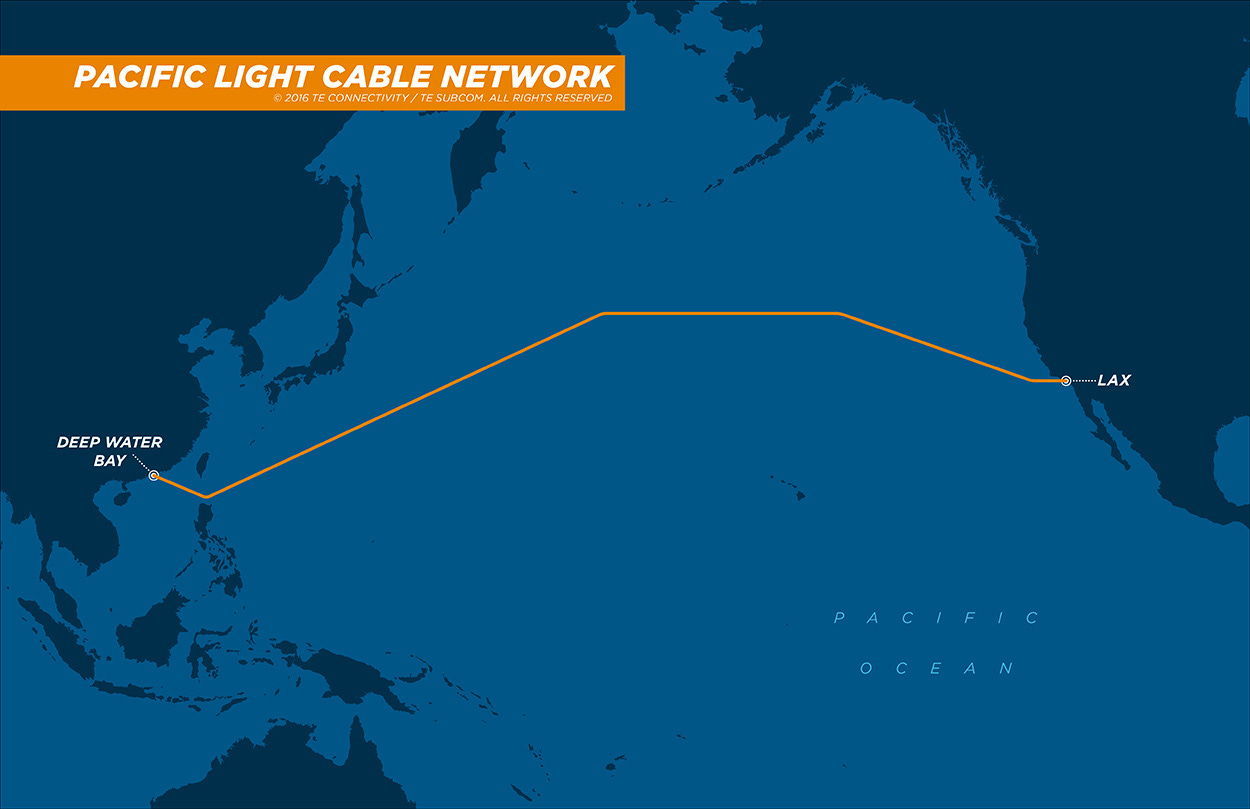
Let me give you another example, a project that I was personally involved in: The Pacific Light Cable Network (PLCN) project began in 2016 with the ambition of building the world’s longest subsea cable — stretching nearly 13,000 kilometers from Hong Kong to Los Angeles. Backed by Google, Facebook, and other telecoms partners, PLCN promised unprecedented capacity across the Pacific. But geopolitics intervened.
Amid rising U.S.–China tensions, the Federal Communications Commission (FCC) in 2020 blocked the Hong Kong landing, citing national security concerns. The project had to be reconfigured, rerouting through Taiwan and the Philippines instead. What began as a symbol of global connectivity became a case study in how infrastructure is now inseparable from geopolitics.
AI will only increase the importance of secure, resilient, diversified cable networks.
Let me end this section with a simple equation: Compute power (算力) is backed by digital infrastructure. Digital infrastructure is backed by electricity (電力) and renewable energy. And together, they represent national power (國力).
Countries that invest in digital infrastructure will lead the AI century. Countries that do not will be left behind.
This is why your work — the work of telcos, data center operators, and infrastructure builders — is more important than ever. This is your moment. The telecom industry is not a sunset industry — it is a sunrise industry for the AI century.
Part III — Control: Governance, Regulation, and the Future of AI in APAC
Now let’s turn to the third pillar: control.
AI governance is no longer a theoretical discussion. It is a practical, urgent, and strategic challenge.
We all know today the AI systems can be so powerful that they can generate content, influence decisions, automate processes, shape public opinion (for better or for worse), and impact national security.
Without governance, AI can cause harm. With good governance, AI can accelerate innovation and economic growth.
Different Governance Models
Today we are seeing three emerging models for AI governance:
The U.S. model: Industry‑driven, innovation‑first, with emerging federal guidelines.
The EU model: Regulation‑first, with the AI Act setting global precedents.
The China model: State‑driven, with strict rules on content, safety, and deployment.
Asia Pacific sits between these models — influenced by all, aligned with none. APAC is also not EU. APAC is not one single internal market and it has many different political systems, economic systems, and different level of infrastructure readiness for AI.
When the European Union passed the world’s first comprehensive AI Act, many expected a “Brussels Effect” — the idea that EU rules would quickly become global standards, just as General Data Protection Regulation (GDPR) reshaped privacy practices worldwide. But that did not happen in Asia Pacific.
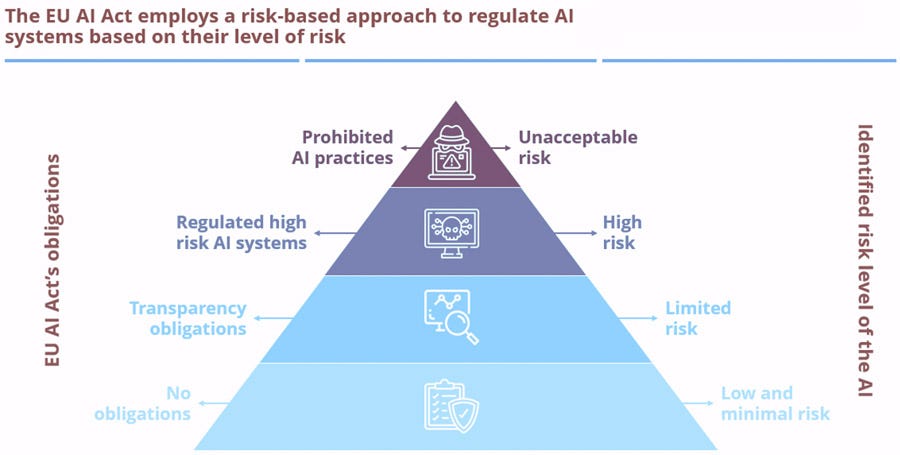
One reason is structural: APAC is not a single market like the EU. It is a patchwork of diverse economies, political systems, and regulatory traditions. Countries from Japan to Indonesia face very different priorities, levels of digital maturity, and institutional capacity. Unlike GDPR, which dealt with a relatively mature and universal issue of data protection, AI governance is still seen as experimental, and many governments prefer to wait, observe, and adapt rather than import a European model wholesale.
Another reason is strategic. APAC governments are balancing innovation with regulation, and many fear that adopting strict EU‑style rules too early could stifle growth. Japan and Singapore, for example, emphasize pro‑innovation frameworks; China pursues its own state‑driven model; and others are still focused on building basic digital infrastructure before regulating frontier AI.
In short, the EU’s AI Act did not trigger a Brussels Effect in Asia Pacific because the region’s diversity, economic priorities, and geopolitical realities make harmonization far harder. Instead of copying Brussels, APAC countries are charting their own paths — some leaning toward light‑touch guidance, others toward national security‑driven control, but few willing to simply follow Europe’s lead.
By contrast, the United States has taken an industry‑first approach. Washington has issued executive orders and voluntary frameworks, but it has largely left innovation to the private sector. This model prioritizes speed, scale, and market leadership, with companies like OpenAI, Google, and Anthropic setting de facto standards through their products. For Asia Pacific, this creates both opportunity and risk.
On one hand, APAC firms can plug into U.S. innovation ecosystems without heavy regulatory barriers. On the other, it means the region risks becoming a rule‑taker rather than a rule‑maker if it does not develop its own governance frameworks. In effect, APAC sits between three poles: Europe’s regulation‑first Brussels model, America’s innovation‑first Silicon Valley model, and China’s state‑driven Beijing model.
Navigating this triangle will define how competitive Asia Pacific remains in the global AI race.
This diversity makes regional alignment difficult. But it also creates an opportunity: APAC can shape its own governance framework — one that balances innovation, safety, and sovereignty.
Public‑Private Partnership
What APAC needs now for the future of AI governance is clear AI safety standards, cross‑border data flow agreements, shared cybersecurity protocols, more investment incentives for compute and connectivity, and public‑private partnerships (PPP) for AI deployment. We already saw some good examples of PPP in countries like Singapore
We already see good examples of PPP working across Asia Pacific. In Singapore, the government has teamed up with Google through the National AI Partnership, applying frontier AI to healthcare, scientific research, and workforce development. This builds on Singapore’s National AI Strategy and shows how a small state can leverage global tech players to punch above its weight.

In Thailand, partnerships with Chinese firms like Tencent are driving AI‑enabled cloud services and smart city projects, while Alibaba Cloud and Huawei are also working with Thai agencies to accelerate e‑commerce and public service transformation. These collaborations demonstrate how governments set strategic priorities while private firms bring capital, talent, and technology.
Indonesia offers another case study. Jakarta has welcomed major investments from Microsoft and AWS, which are building hyperscale data centres and cloud regions to support the country’s digital economy. These partnerships are not just about infrastructure — they are about building ecosystems, training local talent, and ensuring AI adoption benefits society at large.
Together, these examples show that PPP is working in APAC: governments provide vision and legitimacy, while the private sector delivers scale and innovation. This model is essential if the region is to stay competitive in the global AI race.
And most importantly, APAC countries need to raise their own voices on the world stage to join and shape the global AI governance discussions. AI governance should not be a debate just between the U.S. and China. Many middle-power countries as well as Global South countries should also get your voices heard.
In terms of the role of the government, AI governance often means how AI models are deployed, how data is stored and transmitted, how cross‑border traffic is regulated, how compute resources are allocated, and how infrastructure investments are prioritized
Telcos and data centers will be at the center of compliance, implementation, and enforcement.
Let me close with this: the AI century will be defined by the 3Cs: compute, connectivity, and control.
These three forces will determine which countries lead, which companies thrive, and which regions shape the future.
Asia Pacific — stretching from Australia to Mongolia — is already the world’s largest internet market by online users and consumers. It has become the key engine of revenue growth for many American technology companies. The importance of APAC cannot be overstated. The region’s strong growth in e‑commerce and digital advertising, for example, has been a major driver behind the high market valuations of leading U.S. firms listed on Nasdaq and the NYSE.
Just as important, APAC is a mobile‑first region: billions of consumers came online through smartphones, not PCs. That mobile adoption, combined with the rollout of 4G and now 5G networks, is what made platforms like Facebook, YouTube, and TikTok explode across the region — turning APAC into the world’s most dynamic digital marketplace.
And now, the same mobile‑first consumers are shaping the next wave: AI adoption. From voice assistants to Generative AI apps, APAC’s mobile‑native users are driving demand for faster, smarter, and more personalized services — making telecom and data‑centre infrastructure the backbone of the AI economy.
Of course, Asia Pacific also has the talent, and many countries are also ambitious about their future. But ambition is not enough. We must invest, collaborate, and govern wisely.
Telcos and data center operators are not just part of the digital economy — you are the backbone of the AI economy.
If APAC builds strong infrastructure, adopts smart governance, and accelerates innovation, then we will not just stay competitive — we will define the future of AI.
Thank you.